
That Frustrating Moment When Your Garage Door Won't Stay Closed
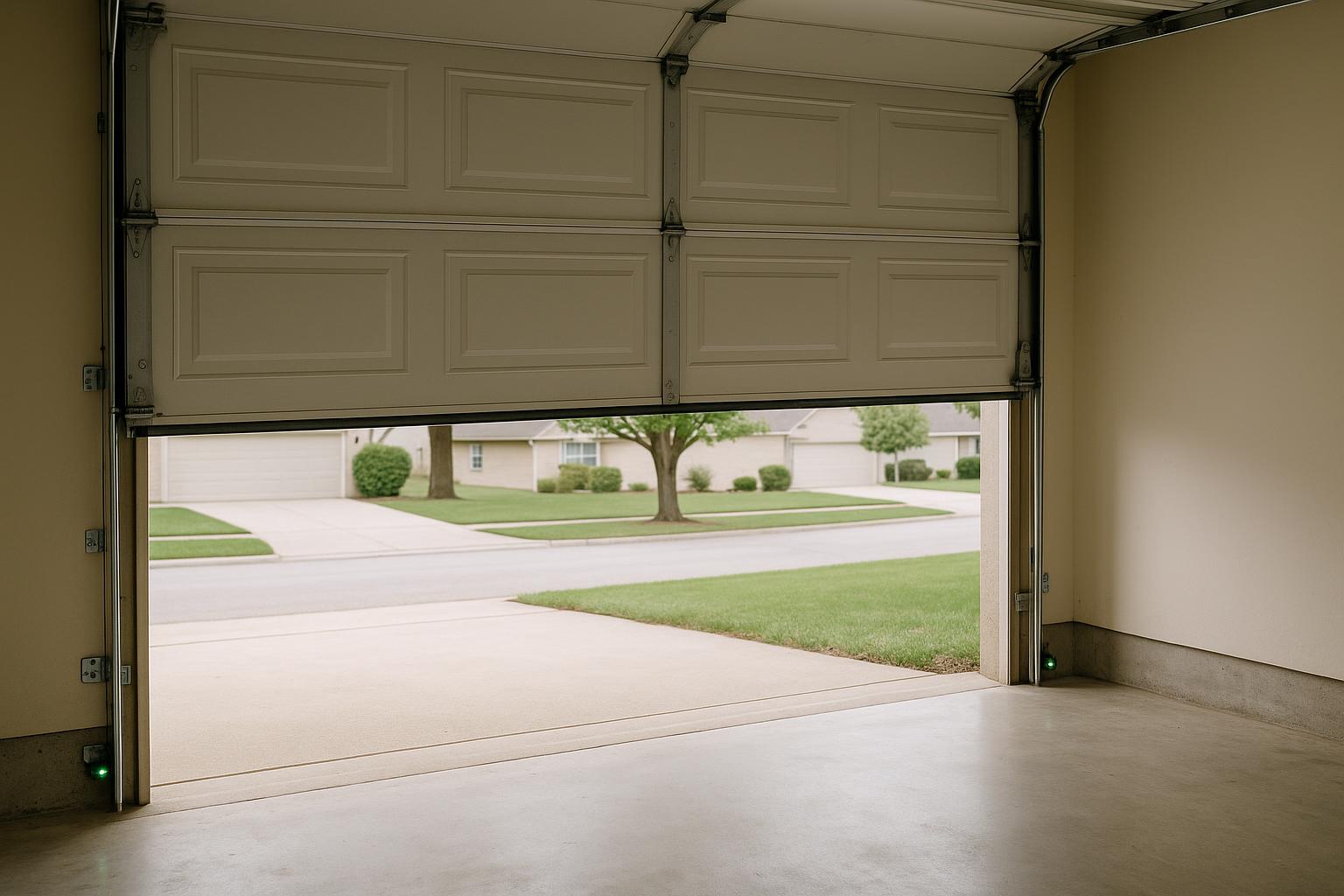
You press the button on your garage door remote, watch the door start its descent, and then — just before it reaches the floor — it stops and reverses back up. You try again. Same thing. Maybe you try holding the wall button, and it still won't cooperate. If this scenario sounds familiar, you're not alone. This is one of the most common garage door complaints we hear from homeowners in Auburn Hills, and the good news is that it's almost always fixable.
Understanding why your garage door reverses before closing completely can save you time, money, and the headache of leaving your garage wide open overnight. Let's walk through the most common causes and what you can do about each one.
The Safety Sensors Are Misaligned or Blocked
This is the number one reason garage doors reverse before reaching the ground. Every garage door opener manufactured after 1993 is required to have photo-eye safety sensors installed near the bottom of the door tracks, about six inches off the ground. These sensors send an invisible beam across the opening, and if anything breaks that beam — a bike, a trash can, a leaf, or even a cobweb — the door will automatically reverse to prevent crushing whatever is in its path.
Here's what to check:
- Look for obstructions. Walk over to both sensors and make sure nothing is sitting in front of them. Even small objects or debris can trigger the reversal.
- Check the indicator lights. Most sensors have small LED lights. If one is blinking or off entirely, the sensors are likely misaligned. Both lights should be solid and steady.
- Clean the lenses. Dust, dirt, and spider webs accumulate on sensor lenses over time, especially in Michigan where seasonal changes bring all kinds of debris into the garage. A soft cloth and a gentle wipe can sometimes solve the problem instantly.
- Check the alignment. If a sensor has been bumped — maybe by a lawnmower or a kid's bicycle — it may need to be repositioned so the two sensors are pointing directly at each other.
The Close-Limit Switch Needs Adjustment
Your garage door opener has settings called limit switches that tell the motor how far the door should travel in both the open and closed positions. If the close-limit switch is set incorrectly, the opener may think the door has hit an obstruction when it's actually just reaching the floor. The motor interprets this as resistance and triggers the auto-reverse safety feature.
Adjusting the limit switch usually involves turning a small screw on the opener unit. However, if you're not comfortable working with the opener's settings, this is a quick fix for a professional technician. Getting it wrong can cause the door to close too far and put stress on the tracks and weatherstripping.
The Garage Door Tracks Are Damaged or Misaligned
Your garage door travels along metal tracks on both sides of the opening. If those tracks are bent, dented, or have shifted out of alignment, the door can bind or encounter resistance as it moves downward. When the opener senses that resistance, it reverses the door as a safety precaution.
Visually inspect the tracks from top to bottom. Look for:
- Visible bends or dents in the metal
- Gaps between the track and the wall or ceiling brackets
- Rollers that seem to be catching or grinding
Track repairs should generally be handled by a trained technician. Attempting to bend tracks back into shape without the right tools can make the problem worse and potentially create a safety hazard.
Worn or Broken Springs Are Creating Imbalance
Garage door springs do the heavy lifting — literally. They counterbalance the weight of the door so the opener doesn't have to work as hard. When springs wear out or break, the door becomes significantly heavier for the opener to manage. This extra weight can trigger the opener's force settings, causing it to reverse.
A quick test: disconnect the opener by pulling the emergency release handle, then manually lift the door halfway and let go. A properly balanced door should stay roughly in place. If it slams down or feels extremely heavy, your springs likely need replacement.
Important safety note: Garage door springs are under extreme tension and can cause serious injury if handled improperly. Spring replacement is not a DIY job. If you suspect your springs are the issue, call a professional right away.
The Opener's Force Settings Are Too Low
Every garage door opener has adjustable force settings that control how much power the motor uses to open and close the door. If the closing force is set too low, the opener may not have enough power to push the door all the way to the ground, interpreting normal friction as an obstruction and reversing.
This sometimes happens after a seasonal change. During Auburn Hills winters, cold temperatures can cause lubricant on the tracks and rollers to thicken, creating more friction than usual. Homeowners who had a perfectly functioning door in September may suddenly find it reversing in January.
While you can adjust the force settings yourself using the dials or buttons on your opener unit, proceed cautiously. Setting the force too high defeats the purpose of the safety reverse feature. A small incremental adjustment is usually all that's needed.
Wiring Issues or a Failing Opener
Less commonly, the problem may be electrical. Frayed or damaged wiring between the sensors and the opener can send faulty signals. Moisture, rodent damage, or simple age can degrade wiring over time. If you've checked everything else and the door still reverses, there may be a wiring issue or the opener's logic board could be failing.
Opener units typically last 10 to 15 years. If yours is approaching that age and experiencing multiple issues, replacement may be more cost-effective than repeated repairs.
When to Call a Professional
Some of these fixes — cleaning sensors, removing obstructions, minor force adjustments — are reasonable for a handy homeowner to tackle. But if you've gone through the basics and the door still won't close, or if the problem involves springs, tracks, or electrical components, it's time to bring in a professional.
At Auburn Hills Overhead Garage Door, we diagnose and fix reversing garage doors regularly for homeowners throughout Auburn Hills, Rochester Hills, Pontiac, Lake Orion, and surrounding areas. We'll identify the root cause, explain your options clearly, and get your door working properly — usually in a single visit.
Don't Ignore a Reversing Garage Door
A garage door that won't close isn't just an inconvenience — it's a security risk. An open garage is an invitation for theft, weather damage, and unwanted critters. It also means your home's largest opening is unprotected, which can affect your energy bills and the temperature in adjacent rooms.
If your garage door keeps reversing and you can't pinpoint the cause, give us a call. We'll get it sorted out quickly so you can get back to pressing that button with confidence.