
That Grinding Sound Isn't Normal
You press the button on your garage door opener, and instead of the smooth, quiet operation you're used to, you hear grinding, scraping, or squealing. It's the kind of sound that makes you wince — and it should. A noisy garage door is rarely just a nuisance. In most cases, it's your door's way of telling you something is wearing out, misaligned, or about to fail.
For homeowners in Auburn Hills and the surrounding communities, this is an especially common issue. Temperature swings, daily use, and aging hardware all take a toll on your garage door system. The good news is that most causes of grinding noises are fixable — especially when you catch them early.
Let's walk through the most common reasons your garage door is making grinding noises and what you should do about each one.
1. Worn or Dry Rollers
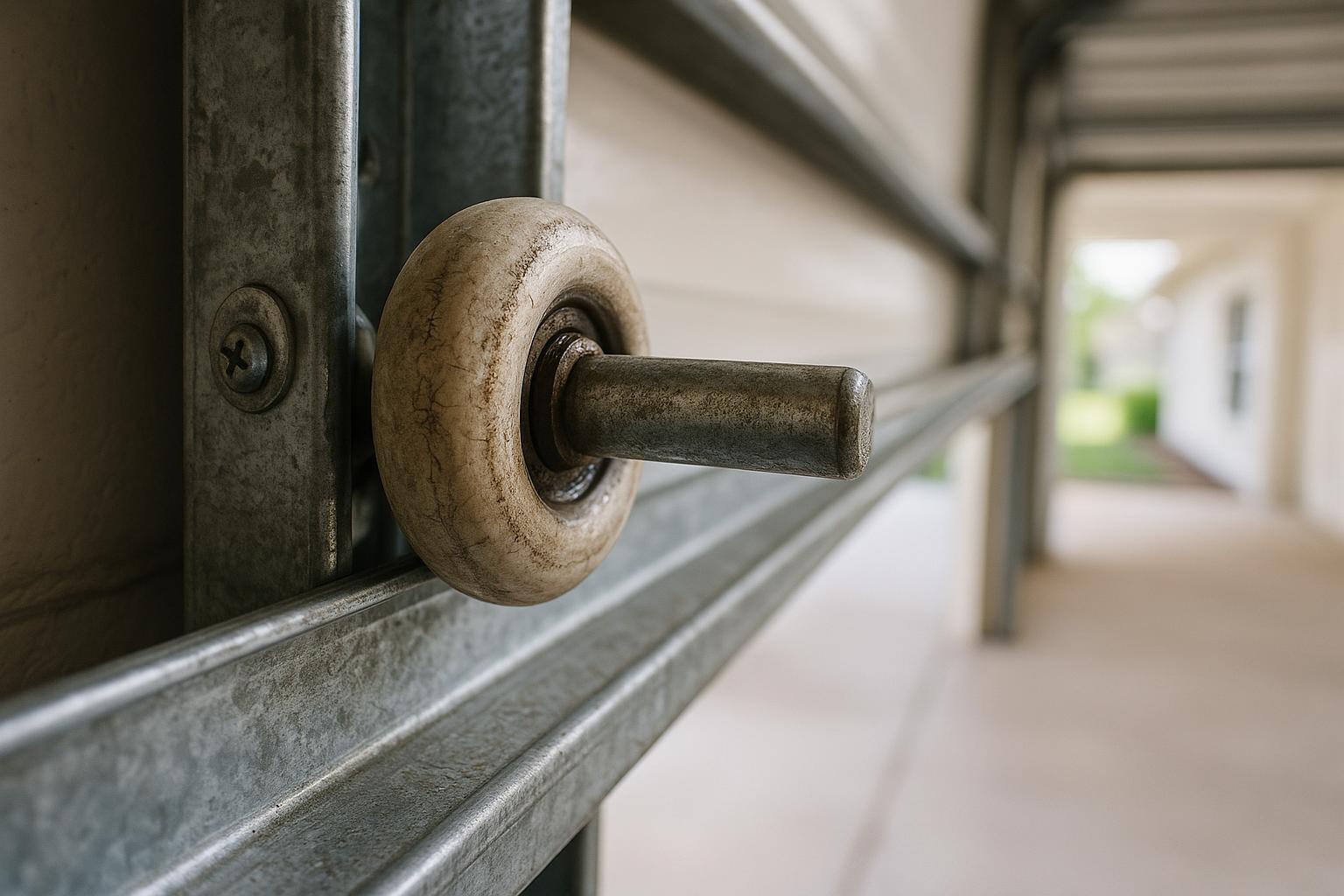
Garage door rollers are small wheels that guide your door along the vertical and horizontal tracks. Over time, these rollers wear down, lose their lubrication, or develop flat spots. When that happens, you'll hear a grinding or rattling noise every time the door moves.
There are two main types of rollers:
- Steel rollers: These are the most common in older doors. They're durable but tend to be noisier, especially as they age. Without regular lubrication, metal-on-metal contact creates that unmistakable grinding sound.
- Nylon rollers: These are quieter and don't require as much maintenance, but they can still crack or wear out over time.
If your rollers are visibly worn, chipped, or no longer spinning freely, it's time for a replacement. This is a relatively affordable repair that can make a dramatic difference in how your door sounds and operates.
2. Lack of Lubrication
This is one of the simplest — and most overlooked — causes of a noisy garage door. Your garage door system has multiple moving parts that need periodic lubrication to function smoothly, including:
- Rollers
- Hinges
- Springs
- Bearing plates
- The opener's rail or chain
When these parts run dry, friction increases and you start hearing grinding, squeaking, or groaning sounds. A garage door-specific silicone or lithium-based lubricant applied to these components every six months can prevent most noise-related issues. Avoid using WD-40 as a long-term lubricant — it's a solvent, not a true lubricant, and it can actually attract dust and grime over time.
3. Misaligned or Damaged Tracks
The metal tracks on either side of your garage door need to be perfectly aligned for the door to travel smoothly. If a track gets bumped, bent, or shifts out of position, the rollers will scrape and grind against the track walls as the door moves.
You might also notice the door hesitating, jerking, or moving unevenly. In severe cases, a misaligned track can cause the door to get stuck or come off the track entirely.
Track alignment is something best left to a professional. Attempting to bend tracks back into position without the right tools can make the problem worse or create a safety hazard.
4. Worn Opener Gears
If the grinding noise seems to be coming from the garage door opener unit mounted on your ceiling rather than the door itself, the problem may be internal. Most chain-drive and belt-drive openers use a set of nylon or plastic gears to transfer motor power to the drive mechanism. Over time, these gears strip or wear down.
When opener gears are failing, you'll typically hear a loud grinding or buzzing sound when you activate the opener, but the door may not move at all — or it may move sluggishly. This is a common issue in openers that are 10 or more years old.
Replacing stripped gears is a repair that can extend the life of your opener by several years, and it's far more affordable than replacing the entire unit.
5. Loose Hardware
Your garage door goes up and down hundreds of times a year. All that movement creates vibration, and vibration loosens hardware. Bolts, nuts, screws, and brackets can all work themselves loose over time, leading to rattling, banging, and grinding sounds.
A simple inspection can reveal loose hinges, bracket bolts, or the mounting hardware on your opener. Tightening everything up is a quick fix, but it's also something that should be part of your regular maintenance routine.
6. The Torsion Bar or Bearing Plates
The torsion bar runs horizontally above your garage door and holds the torsion springs. On each end of the bar are bearing plates that allow it to rotate smoothly. If these bearings wear out or lose lubrication, you'll hear a grinding or squealing noise — particularly when the door is opening, since that's when the torsion system does most of its work.
Because torsion springs and the components around them are under extreme tension, this is never a DIY repair. A trained technician can safely inspect and replace worn bearing plates without risk of injury.
When to Call a Professional
Some noise issues — like applying lubricant or tightening a loose bolt — are simple enough for a handy homeowner to handle. But many grinding noises point to problems that require professional tools, replacement parts, and expertise to fix safely.
You should call a garage door technician if:
- The grinding is accompanied by the door shaking, jerking, or moving unevenly
- You suspect the noise is coming from the springs or torsion system
- The opener runs but the door doesn't move
- You see visible damage to the tracks, rollers, or cables
- The noise has gotten progressively worse over several weeks
Ignoring a grinding garage door doesn't just mean living with an annoying sound. It often means accelerating wear on other components, which turns a minor repair into a major one.
Keep Your Garage Door Running Quietly in Auburn Hills
A well-maintained garage door should operate smoothly and relatively quietly. If yours has started grinding, squealing, or making any unusual sounds, it's worth investigating sooner rather than later. Most of the issues behind noisy garage doors are straightforward to fix when caught early — but they can lead to expensive damage or even safety hazards if left unaddressed.
At Auburn Hills Overhead Garage Door, we help homeowners across Auburn Hills, Rochester Hills, Pontiac, Lake Orion, and the surrounding area diagnose and fix noisy garage doors every day. Whether you need a roller replacement, opener repair, or a full maintenance tune-up, we'll show up on time, identify the problem, and get your door running the way it should.
If your garage door is making sounds it shouldn't, don't wait for the problem to get worse. Give us a call and let's take care of it.