
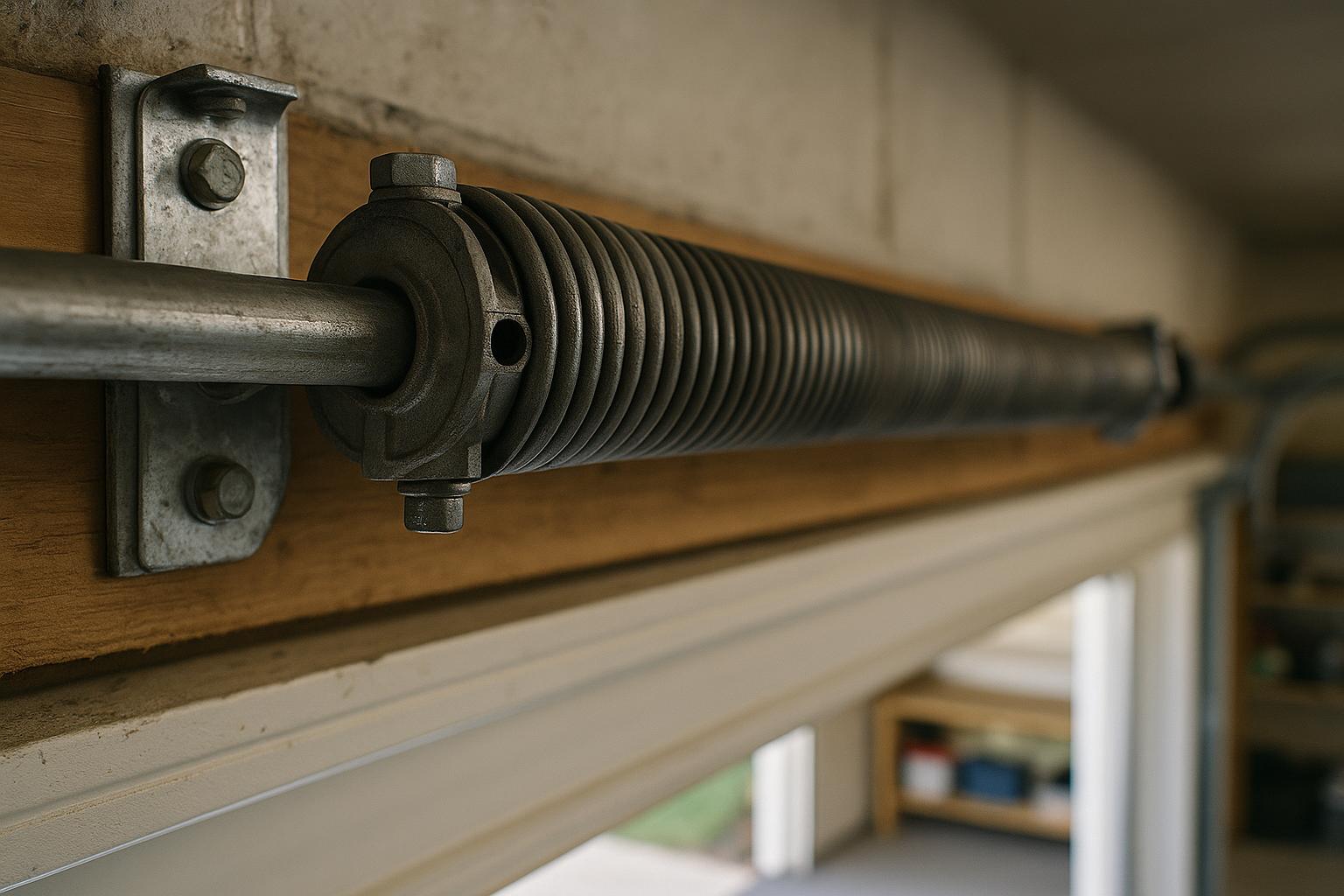
Your Garage Door Springs Are Doing More Work Than You Think
Every time you open and close your garage door, the springs are doing the heavy lifting — literally. A standard residential garage door weighs between 130 and 350 pounds, and it's the springs that counterbalance all that weight so your opener doesn't have to muscle the door up on its own. Over time, those springs wear out, and when they fail, the results can be inconvenient at best and dangerous at worst.
If you're a homeowner in Auburn Hills, your garage door likely gets used multiple times a day, year-round. Between Michigan's temperature swings and everyday wear and tear, understanding when to replace your springs can save you from an unexpected breakdown — or a costly emergency repair.
How Long Do Garage Door Springs Last?
Most standard garage door springs are rated for approximately 10,000 cycles. One cycle equals one full open and one full close. That might sound like a lot, but consider how quickly those cycles add up:
- If you open and close your garage door 4 times a day, that's roughly 1,460 cycles per year.
- At that rate, standard springs will last about 7 to 9 years.
- Families that use the garage as their primary entrance may hit 6 to 8 cycles daily, cutting the lifespan to around 4 to 5 years.
High-cycle springs are also available, rated for 25,000 or even 50,000 cycles. These cost more upfront but can last significantly longer, making them a smart investment for busy households.
Torsion Springs vs. Extension Springs
There are two main types of garage door springs, and each has different characteristics when it comes to lifespan and replacement:
Torsion Springs
Torsion springs are mounted on a metal shaft directly above the garage door opening. They twist and unwind to raise and lower the door. These are the more common type in modern garage door systems and are generally considered safer and longer-lasting. Most residential garage doors in Auburn Hills use one or two torsion springs.
Extension Springs
Extension springs run along the horizontal tracks on either side of the door. They stretch and contract to provide lifting force. Extension springs are more common on older garage doors and lighter single-car doors. They tend to wear out faster and can be more dangerous when they break because they're under significant tension and can snap violently if not equipped with safety cables.
Regardless of which type your garage door uses, both will eventually need to be replaced. The key is catching the warning signs before a complete failure.
Warning Signs Your Garage Door Springs Are Wearing Out
Springs rarely fail without some advance notice. Here are the most common signs Auburn Hills homeowners should watch for:
- The door feels heavier than usual. If you disconnect the opener and try to lift the door manually, it should move relatively easily. If it feels extremely heavy or won't stay open on its own, the springs are likely losing tension.
- The door opens unevenly. If one side of the door rises faster than the other, one spring may be weaker or broken. This puts extra strain on the remaining spring and the opener.
- You hear loud squeaking or grinding. While some noise is normal, excessive squeaking or grinding from the spring area can indicate metal fatigue and insufficient lubrication.
- Visible gaps in the spring coils. A torsion spring that has broken will have a visible gap in the coils, usually near the center. If you see this, do not attempt to operate the door.
- The opener struggles or stops working. When springs lose tension, the opener has to work much harder to lift the door. This can cause the motor to overheat, strip gears, or stop functioning entirely.
- The door slams shut quickly. Worn springs can't control the door's descent properly, causing it to close faster than normal. This is a serious safety hazard, especially for families with children and pets.
Can You Replace Garage Door Springs Yourself?
We understand the appeal of DIY projects, but garage door spring replacement is one job we strongly recommend leaving to professionals. Here's why:
- Extreme tension. Garage door springs are under tremendous force. A torsion spring that snaps or is improperly wound can cause severe injury or even death.
- Specialized tools required. Proper spring replacement requires winding bars, clamps, and other tools that most homeowners don't have on hand.
- Precise calibration. Springs must be wound to the exact tension specified for your door's weight and size. Too much or too little tension creates safety risks and accelerates wear on other components.
- Paired replacement. If your door uses two springs and only one has broken, it's best practice to replace both at the same time. The remaining spring has the same amount of wear and is likely to fail soon, which would mean paying for another service call.
A trained technician can complete a spring replacement safely in about an hour, and you'll have the peace of mind that everything is properly balanced and adjusted.
How to Extend the Life of Your Garage Door Springs
While springs will eventually wear out no matter what, regular maintenance can help you get the most out of them:
- Lubricate the springs twice a year. Use a silicone-based or white lithium garage door lubricant on the coils. This reduces friction, prevents rust, and helps the springs operate smoothly. We recommend doing this in the fall before winter and again in the spring.
- Schedule annual maintenance. A professional tune-up includes inspecting the springs, checking tension and balance, tightening hardware, and lubricating all moving parts. This is especially important for homes in Auburn Hills and surrounding areas like Rochester Hills and Waterford, where seasonal temperature changes put extra stress on metal components.
- Keep the door balanced. An unbalanced door forces one spring to work harder than the other. If your door doesn't stay in place when you lift it halfway and release it, the balance needs adjustment.
- Consider upgrading to high-cycle springs. If you're replacing springs anyway, ask your technician about high-cycle options. The upfront cost is higher, but you may not need to think about replacement again for 15 to 20 years.
When to Call a Professional
If you've noticed any of the warning signs listed above, or if it's been seven or more years since your springs were last replaced, it's time to have them inspected. A broken spring isn't just an inconvenience — it can leave your car trapped in the garage, compromise your home's security, and create a genuine safety hazard.
At Auburn Hills Overhead Garage Door, we handle spring replacements for homeowners across Auburn Hills, Pontiac, Lake Orion, Orion Township, and the surrounding communities. We carry a wide selection of springs to fit virtually any residential garage door, and we stand behind every repair we make.
Don't wait for a spring to snap at the worst possible time. Contact us today to schedule an inspection or spring replacement, and keep your garage door operating safely and reliably for years to come.