
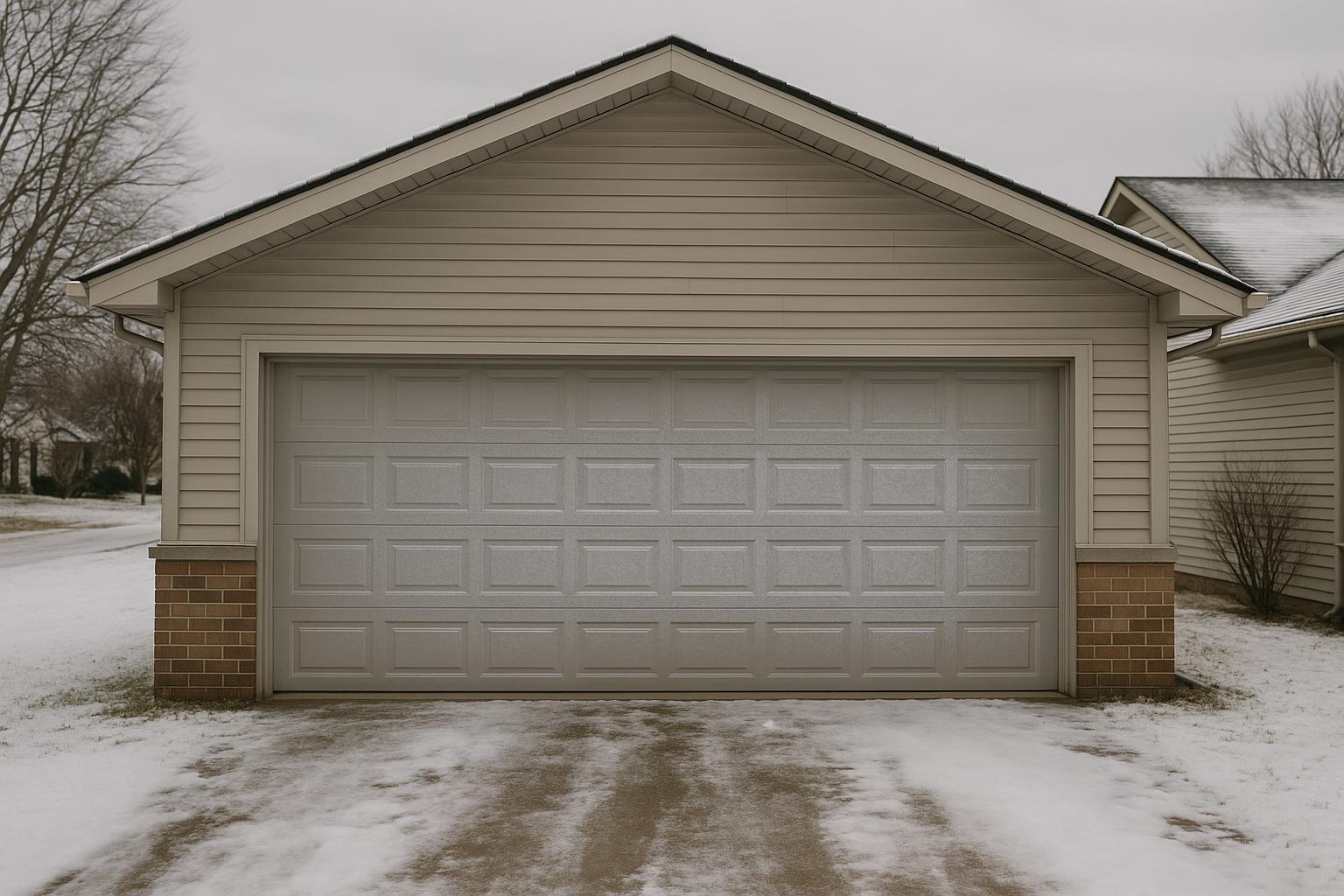
Winter Takes a Toll on Your Garage Door
If you've lived in Auburn Hills for even one winter, you know how brutal Michigan cold can be. Temperatures regularly dip below freezing from December through March, and that kind of sustained cold doesn't just affect your heating bill — it can cause serious problems with your garage door system.
Your garage door is the largest moving part of your home, and it relies on a combination of metal hardware, lubricants, rubber seals, and electronic components to function properly. Every one of those elements is vulnerable to cold weather. The good news is that most winter garage door problems are preventable with a little knowledge and proactive maintenance.
Frozen Garage Door Seals
One of the most common winter complaints we hear from homeowners in Auburn Hills and the surrounding communities is that their garage door is stuck to the ground. This happens when moisture collects along the bottom weatherstripping seal and freezes overnight, essentially gluing your door to the garage floor.
If this happens to you, never force the door open using your garage door opener. The opener motor isn't designed to break through ice, and forcing it can strip the gears, damage the bottom panel, or tear the weatherstripping right off.
Instead, try these steps:
- Use a heat gun or hair dryer to gently melt the ice along the bottom seal.
- Pour warm (not boiling) water along the base of the door to loosen the bond.
- Carefully use a flat shovel or ice scraper to chip away the ice without damaging the seal.
To prevent this from happening in the first place, apply a thin coat of silicone-based lubricant to the bottom seal before the first freeze. This creates a barrier that prevents moisture from bonding the rubber to the concrete.
Contracting Metal and Hardened Springs
Metal contracts in cold temperatures — it's basic physics. But when that metal is part of your garage door's torsion or extension spring system, contraction can cause real performance issues. Springs that were perfectly balanced in September may feel tighter or behave differently in January.
Cold weather also makes the metal in your springs more brittle. This is why we see a noticeable spike in broken spring calls every winter here in Auburn Hills and Rochester Hills. A spring that was already nearing the end of its lifespan is far more likely to snap when temperatures plunge below 20°F.
Warning signs that your springs are struggling in the cold:
- The door feels heavier than usual when you lift it manually.
- The opener strains or hesitates when opening the door.
- You hear loud popping or creaking sounds during operation.
- The door doesn't stay open when you release it halfway up.
If you notice any of these symptoms, it's time to call a professional. Garage door springs are under extreme tension and should never be adjusted or replaced by someone without proper training and tools.
Thickened Lubricant and Stiff Rollers
The lubricant on your garage door's moving parts — rollers, hinges, tracks, and bearings — can thicken or even solidify in freezing temperatures. When this happens, the door may move sluggishly, make grinding noises, or put extra strain on the opener motor.
Standard WD-40 or general-purpose oils aren't ideal for garage door hardware in cold climates. Instead, use a silicone-based or lithium-based garage door lubricant that's rated for low temperatures. These products maintain their viscosity in the cold and keep your hardware moving freely.
We recommend lubricating all moving parts at least twice during the winter season — once before the cold sets in and again in mid-January or February.
Opener Issues in Extreme Cold
Your garage door opener is an electromechanical device, and cold weather can affect both sides of that equation. The grease inside the motor housing can stiffen, reducing efficiency. The logic board and sensors can also behave erratically when temperatures drop significantly.
Common cold-weather opener problems include:
- Slow response time — The motor takes longer to engage after you press the remote.
- Reduced lifting power — Combined with stiffer springs and thicker lubricant, the opener may struggle to lift the door.
- Safety sensor misalignment — Metal brackets holding the photo-eye sensors can shift slightly as they contract, causing the door to refuse to close.
If your garage is unheated — as most are in the Auburn Hills area — there's not much you can do about the ambient temperature. But keeping the opener and all hardware well-maintained goes a long way toward preventing cold-related failures.
Weatherstripping Wear and Energy Loss
The weatherstripping around your garage door — along the bottom, sides, and top — serves as your first line of defense against cold air, snow, and moisture. Over time, rubber and vinyl seals crack, shrink, and lose their flexibility, especially after repeated freeze-thaw cycles.
Damaged weatherstripping lets cold air pour into your garage, which can:
- Freeze pipes that run through the garage.
- Make adjacent rooms in your home harder to heat.
- Allow snow and water to seep under the door, creating ice hazards.
Inspect your weatherstripping at the start of every winter. If you see visible cracks, gaps, or sections that have pulled away from the door, it's time for a replacement. This is a relatively inexpensive fix that can make a noticeable difference in your energy bills and comfort.
Winter Garage Door Maintenance Checklist
Here's a quick checklist to help you winterize your garage door before the worst of the cold hits:
- Lubricate all moving parts with a cold-weather-rated silicone or lithium spray.
- Inspect springs for signs of rust, wear, or gaps between the coils.
- Check weatherstripping along the bottom, sides, and header for cracks or gaps.
- Test the balance of the door by disconnecting the opener and lifting the door manually to the halfway point. It should stay in place.
- Clean the tracks and remove any debris that could cause the rollers to bind.
- Test the safety sensors to make sure they're aligned and functioning.
- Apply silicone lubricant to the bottom seal to prevent freezing to the floor.
If any of these checks reveal a problem you're not comfortable handling yourself, don't hesitate to reach out to a professional.
Stay Ahead of Winter Problems
The best way to avoid a garage door emergency on the coldest morning of the year is to take care of maintenance before winter arrives. At Auburn Hills Overhead Garage Door, we help homeowners throughout Auburn Hills, Pontiac, Lake Orion, Waterford, and Rochester Hills keep their garage doors running reliably all winter long.
Whether you need a broken spring replaced, new weatherstripping installed, or a full pre-winter tune-up, we show up on time and get the job done right. Give us a call before the next cold snap — your garage door will thank you.